
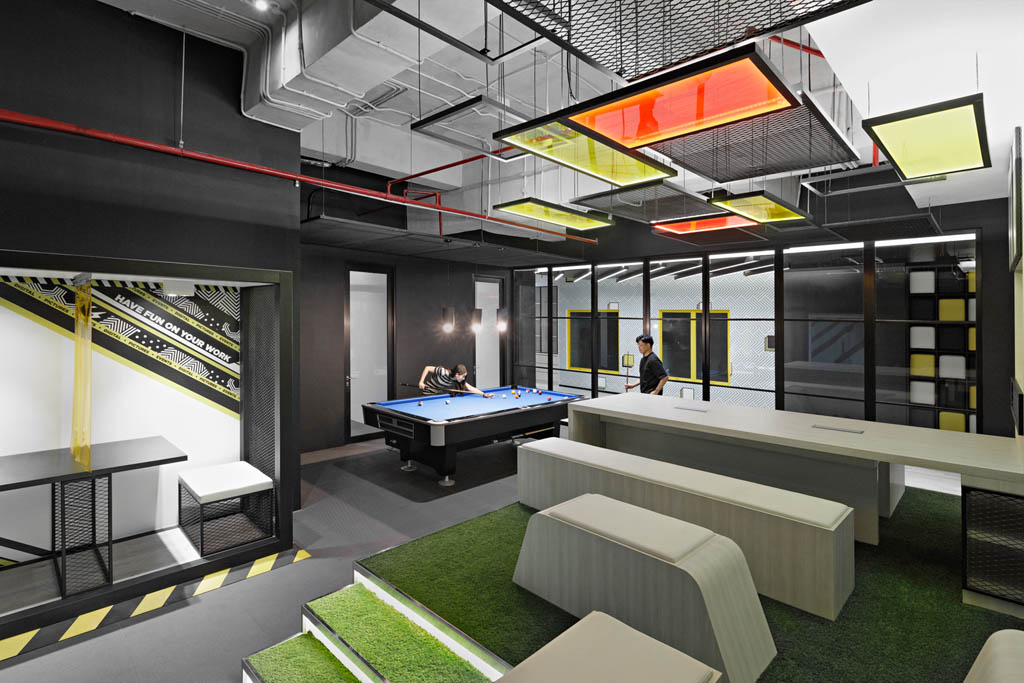
And honestly, that orchestration is rarely visible.
We tend to credit the brand, the architect, or maybe the technology. How it unfolds. How it stays with you. I didn’t fully appreciate that until I started digging into how modern experiential spaces are actually created. It’s not just décor. It’s narrative strategy, environmental psychology, lighting science, acoustics, spatial choreography — all working together in a way that’s almost invisible when done well.
And that’s the point.
Experience Is the New Currency
The kind you photograph. The kind you talk about later. That shift has fundamentally changed how spaces are conceived. Retail stores now behave like theatrical sets. Corporate lobbies double as storytelling platforms. Even restaurants are carefully curated sensory journeys. It starts with a deceptively simple question: What should people feel when they walk in?
Excitement? Nostalgia? Awe? Comfort?
From there, everything becomes intentional. Ceiling height affects perception of scale and status. Pathways influence behavioral flow. Lighting temperature subtly shifts emotional tone. Sound design can either energize or calm a space. None of it is random.
In fact, when it feels effortless, that’s usually the result of dozens of iterations behind the scenes.
Storytelling Through Space
Here’s something that surprised me: the most successful entertainment-driven environments begin with storyboarding, not floor plans.
That’s because immersive design borrows heavily from film and theater. There’s an arc. A build-up. A climax. A resolution.
The same logic applies outside of theme parks. Corporate visitor centers, experiential showrooms, branded exhibitions — they all benefit from narrative sequencing. When done right, guests don’t just move through a space; they progress through a story.
And that progression is engineered.
A reputable entertainment design company integrates architects, creative directors, engineers, graphic designers, and digital technologists into a cohesive workflow. It’s interdisciplinary by necessity. You can’t separate structure from spectacle anymore. The two are intertwined.
Technology Is a Tool, Not the Star
There’s a temptation to equate immersive design with high-end tech — projection mapping, interactive displays, augmented reality. And yes, those tools are powerful. But they’re only effective when used with restraint and purpose.
The goal isn’t to overwhelm. It’s to engage.
I’ve walked into spaces packed with cutting-edge screens that felt strangely hollow. And I’ve stood inside environments with minimal tech that felt almost magical. The difference? Intention.
The Psychology Behind Immersion
Let’s talk about something most people don’t consciously notice: control.
Immersive environments carefully manage what you see — and what you don’t. Sightlines are curated. Reveals are timed. Scale is manipulated. Designers guide attention the way a filmmaker directs a camera.
In these contexts, an entertainment design company becomes a translator. It interprets organizational identity and expresses it spatially.
And here’s the thing — that translation affects behavior.
A thoughtfully designed workspace can foster collaboration. A compelling exhibition can increase dwell time. A well-crafted brand experience can elevate perceived value without changing the core product at all.
That’s not just aesthetics. That’s measurable business impact.
Collaboration Is Everything
One of the more under-discussed realities of experiential projects is their complexity. Budgets are large. Timelines are tight. Stakeholders have competing priorities.
There’s creative ambition on one side and engineering feasibility on the other. Add regulatory compliance, safety standards, sustainability considerations — it becomes a balancing act.
The best outcomes emerge when creative vision and technical execution are aligned from day one.
I’ve spoken with project managers who say the difference between a smooth launch and a costly delay often comes down to early integration. Bringing in an entertainment design company at the conceptual stage, rather than after architectural plans are locked in, can prevent expensive redesigns later.
It’s not glamorous advice. But it’s practical.
Designing for Memory
At its core, immersive design is about memory creation.
Think about the last place that genuinely stayed with you. Maybe it was a dark ride that made you laugh like a kid. Or an exhibition that quietly shifted your perspective. Or a retail concept store that felt more like an art installation than a shop.
Chances are, the emotional imprint was intentional.
Designing for memory requires understanding human behavior at a granular level. How long can attention be sustained? When does novelty fatigue set in? What sensory combinations create delight versus overload?
These questions aren’t abstract. They’re tested, prototyped, refined.
And while visitors may never see the process, they feel the result.
The Future Feels More Human, Not Less
With all the talk about AI, automation, and digital overlays, you might assume experiential environments will become increasingly synthetic. But interestingly, the opposite seems to be happening.
There’s a growing desire for authenticity. For tactile materials. For spaces that feel emotionally grounded.
Technology still plays a role, of course. But it’s being integrated in ways that enhance human connection rather than replace it.
The most forward-thinking entertainment design company approaches innovation with restraint. It asks not just “What can we build?” but “Why should we?”
That shift toward intentionality feels promising.
Final Thoughts
We often remember places long after we’ve forgotten the specifics of what we bought there or even who we were with. Space has that power.
And while we rarely think about the teams behind those experiences, their influence shapes how we interact with brands, institutions, and even each other.
Immersive environments aren’t accidental. They’re crafted — layer by layer, detail by detail — by specialists who understand that design isn’t just visual. It’s emotional. Behavioral. Narrative.
So the next time you step into a space that makes you pause — just for a second — consider the unseen hands that choreographed that moment.
Chances are, somewhere in the background, an entertainment design company was quietly turning ideas into something you could feel.


